Growth Fork blog
Scaling Multisite Operations with Precision in 2026
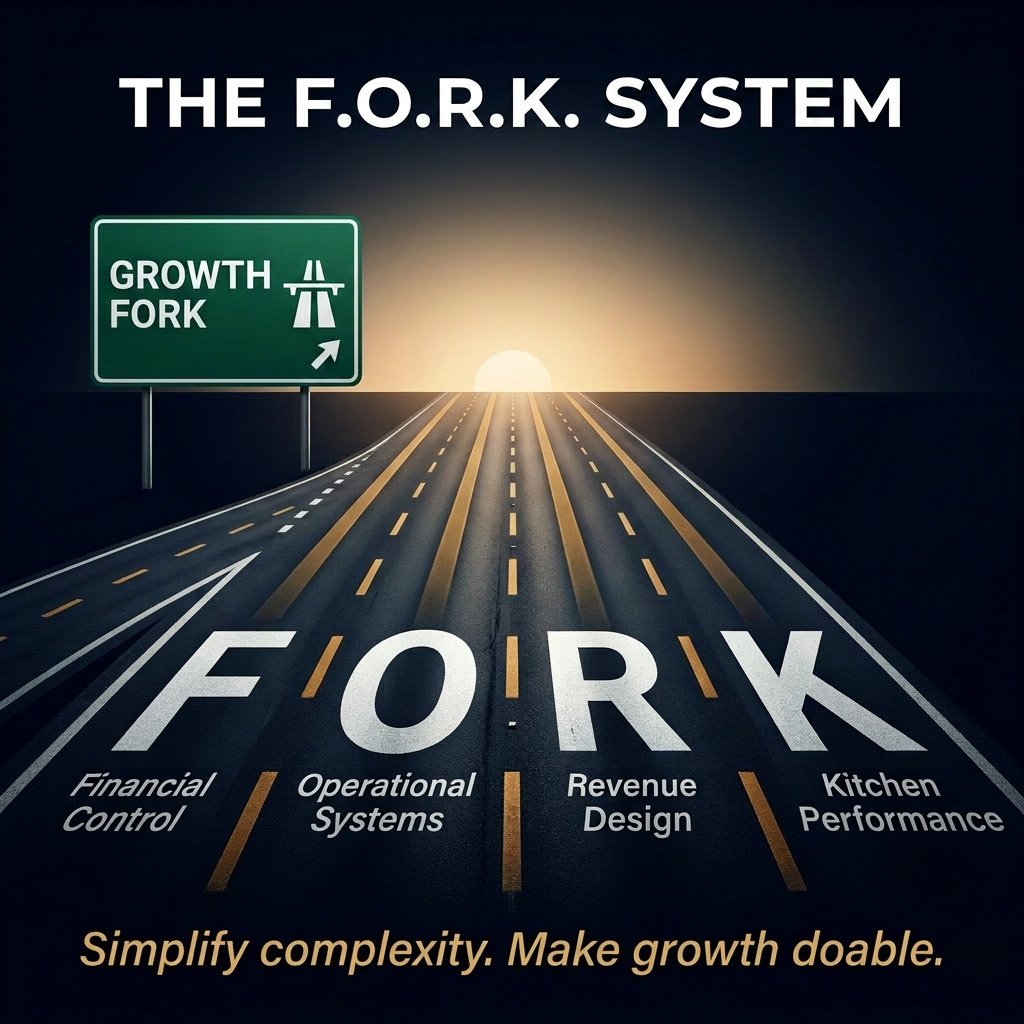
Restaurant Group Consultant: Scaling Multisite Operations with Precision in 2026
24 July 2026
Your third site isn't failing because of a weak manager. It's failing because your brain is still the only operating system in the company. Scaling a hospitality brand is a structural challenge, not a culinary one. If you're still the one making every minor decision, you aren't an owner; you're a bottleneck. A specialist restaurant group consultant steps in here to replace founder intuition with a rigid architecture of accountability.
You already know that inconsistent guest experiences and eroding profit margins are symptoms of a deeper operational leak. You're likely tired of being the only person who truly cares about the bottom line or the culture of the kitchen. This article shows you how to transition from founder-led chaos to a high-output, multisite organisation that thrives without your constant presence. We'll examine the tactical shifts required to improve manager performance, gain real-time data visibility, and build the scalable infrastructure needed to dominate the market in 2026.
Key Takeaways
- Understand why the "Rule of Three" causes operations to fracture and how a restaurant group consultant builds the rigid architecture needed to survive rapid expansion.
- Identify and plug operational leaks across multiple sites by implementing a framework that treats profit margins and labour cost benchmarks as non-negotiable metrics.
- Develop tactical SOPs that act as the DNA of your business, ensuring consistent guest experiences whilst eliminating the need for founder-led daily decision-making.
- Close the "Manager Gap" by shifting from reactive troubleshooting to proactive leadership training that empowers site managers to own their KPIs and staff retention.
- Leverage an integrated methodology of specialist consulting and proprietary software to provide clear, data-driven visibility into every site within your portfolio.
Table of Contents
- What is a Restaurant Group Consultant and Why Does Scale Demand One?
- The Multisite Accountability Framework: Plugging Profit Leaks
- SOP Development: Building the Restaurant Group Blueprint
- Leadership Strengthening: Training Managers for Total Accountability
- Partnering for Growth: The Growthfork Methodology
What is a Restaurant Group Consultant and Why Does Scale Demand One?
A restaurant group consultant is a systems architect for multisite hospitality. They don't care about the aesthetic of your napkins. They care about the structural integrity of your operation. Their primary objective is to build a business that delivers a consistent ROI without you having to step foot in the building. It's about moving from a "founder-led" culture to a systemised organisation. This isn't about coaching your feelings. It's about engineering your profitability.
The "Rule of Three" is where most growth stories end. Managing one site is a job. Managing two is a stretch. At three sites, the wheels come off. You can't be in three places at once. You can't see every plate or watch every guest interaction. This is when operational leaks compound. Food waste doubles. Labour costs creep up. Staff turnover spikes because there is no clear culture of accountability. Traditional consultants focus on "creative" fixes like rebranding. A tactical restaurant group consultant focuses on the engine room.
The Transition from Single-Site to Group Operations
Founder-led management is a bottleneck. If your business relies on your "gut feeling" or intuition, it will fail at scale. You must stop managing people and start managing systems. At the multisite level, Restaurant management becomes a data-driven discipline. You need clear KPIs and labour cost benchmarks that your team can hit without you breathing down their necks. Transitioning to a group means your role shifts. You are no longer the head chef or the lead host. You are the architect of a high-output machine. Intuition fails when you can no longer see the floor. Systems don't.
Key Areas of Impact for a Tactical Consultant
A tactical restaurant group consultant focuses on surgical strikes on inefficiency. They perform deep operational audits to find where your profit is bleeding out. This isn't a passive exercise; it is a direct intervention in your P&L. Key areas of focus include:
- Operational Audits: Identifying hidden leaks in food waste, labour scheduling, and procurement.
- SOP Development: Creating a "source of truth" that dictates exactly how the business runs. These aren't dusty manuals. They are living blueprints for every site.
- Leadership Strengthening: Turning site managers into autonomous business units who own their results.
If you are ready to prepare for expansion, you need to harden your infrastructure. You can find the specific tools and frameworks to assist this transition in our product catalogue. The goal is simple: total visibility and total control across every site in your portfolio.
The Multisite Accountability Framework: Plugging Profit Leaks
Accountability isn't a suggestion. It's the price of entry for scale. Most operators treat profit margins as a byproduct of luck or market forces. They aren't. Profit is a controlled variable. When you scale, small operational leaks become floods. A 2% variance in COGS at one site is a nuisance. At ten sites, it's a catastrophe that can sink the entire group. A restaurant group consultant builds the structural dam. They move your business from "hoping for the best" to "demanding the standard." This culture must be top-down. If you don't hold your area managers to rigid KPIs, they will never hold site managers accountable. The chain breaks at the top.
Operational accountability acts as the anchor for every site in your portfolio. It replaces reactive monthly reviews with proactive daily adjustments. You cannot manage what you do not measure. By the time you see a monthly P&L, the damage is already done. You need a framework that identifies deviations in real time and demands immediate correction. This isn't about being "mean." It's about being precise. High-performing teams actually crave this clarity. They want to know exactly what winning looks like.
Identifying the 4 Common Operational Leaks
Leaks are usually invisible until they hit the bank account. You must look for specific fractures in your operation. These 7 essential tips for management highlight the need for financial control, but multisite operations require a deeper dive into these four areas:
- Labour inefficiency: Scheduling based on "how we've always done it" rather than data-driven labour cost benchmarks.
- Poor Menu Engineering: Failing to optimise high-margin items across the group, leading to inconsistent profit margins and missed revenue opportunities.
- Stagnant Average Transaction Value: A lack of upsell systems or staff training that leaves money on the table at every site, compounding across the portfolio.
- Service inconsistency: "Standard drift" occurs when distance from the founder increases. This kills customer lifetime value.
Deploying Hospitality Software for Real-Time Intelligence
Monthly P&L reviews are autopsies. You're looking at why the patient died four weeks ago. You need a pulse. Modern restaurant group consultant strategies rely on proprietary hospitality software to provide real-time intelligence. This allows you to see labour costs and average transaction value as they happen. If a site is over-laboured by 2 PM, you fix it by 3 PM. You don't wait for a month-end report to tell you that you overspent. This "Zero-Detour" approach uses live data to enforce SOP compliance across every postcode. If you're struggling to see where the money is going, assess your current operational health to find the leaks before they compound.
SOP Development: Building the Restaurant Group Blueprint
SOPs are the DNA of your business. They are not suggestions. They are the rigid instructions that ensure Site A and Site B operate with identical precision. For a restaurant group consultant, these procedures represent the brand’s valuation. If your business relies on your personal charisma to function, it has no value. Buyers and investors pay for systems, not personalities. When you systemise your operations, you transform your restaurant from a job you own into an asset that works for you. This is the difference between a local favourite and a national group.
Most operational manuals are useless. They are thick binders that gather dust in a manager’s office. Tactical SOPs are different. They are short, punchy, and designed for the floor. They drive action. Whilst your specific SOPs will be unique to your brand, they should align with broader Food Service Guidelines to ensure safety and operational integrity at every site. Moving from a single-site "starting a new restaurant SOP" to a group-wide deployment requires a shift in mindset. You are no longer writing for yourself. You are writing for a manager you might only see once a month.
Systems vs. Intuition: The Scalability Battle
Hiring "good people" is a lazy strategy. It’s a gamble. Good people leave. They get tired. They have bad days. A systemised business doesn't rely on heroics; it relies on the blueprint. SOPs reduce manager stress by removing the guesswork. When a manager knows exactly how to handle a labour cost spike or a supplier failure, they stay longer. Staff retention improves because the expectations are clear. The "Blueprint" method ensures that the guest experience is never left to chance. It makes your success repeatable.
How to Write SOPs for Maximum Precision
Stop using soft language. SOPs require the imperative mood. Use "Do this," not "You should try to do this." Focus your energy on high-stakes procedures that directly impact your profit margins. A restaurant group consultant prioritises these areas:
- Opening and Closing: The critical moments where labour and energy costs are won or lost.
- Inventory and Procurement: The procedures that prevent theoretical margin variance.
- Accountability Checks: Defining exactly who checks the checker. If an SOP isn't audited, it doesn't exist.
Precision in your language leads to precision on the floor. If you want to scale, you must kill the "good enough" culture. Every task must have a standard, and every standard must be documented. This is how you build a high-output organisation that thrives under pressure.
Leadership Strengthening: Training Managers for Total Accountability
Most restaurant groups suffer from a self-inflicted "Manager Gap." You promote your best waiter or most reliable chef and wonder why your labour costs explode. They aren't managers. They are high-performing staff members in over their heads. Without specific training, they rely on being liked rather than being respected. A restaurant group consultant treats leadership training as a hard operational investment, not a soft-skill expense. It is the mechanism that protects your profit margins at the site level. If your managers don't understand the accountability loop, they will never enforce your SOPs. Standards will drift. Profits will bleed.
Effective leadership in a multisite environment requires a "Tough Love" mentorship. This means creating a supportive environment where managers have the tools to succeed, but the standards remain non-negotiable. You aren't there to be their friend. You are there to lead a high-performing business unit. Managers must own the digital reputation of their site, treating Google reviews as a live KPI of operational health and customer experience. High staff turnover is often a symptom of poor leadership, not the market. When you harden your leadership layer, you reduce staff turnover and improve the guest experience simultaneously. High standards attract high performers. Mediocrity attracts more mediocrity.
The Restaurant Owner Coaching Journey
Stop being a firefighter. If you are still answering WhatsApp messages about broken glass or staff no-shows at 11 PM, you haven't scaled. You've simply built a bigger prison. Owner coaching shifts your behaviour from tactical meddling to strategic oversight. You must move from "Firefighter" to "Systems Architect." This requires learning the difference between delegation and abdication. Delegating via systems ensures the work is done to your standard. Abdicating via trust is just hoping for the best. Trust is not a management strategy. Strengthening your executive mindset is the only way to prepare for expansion.
Hospitality Manager Training Programmes
Your managers need to be business-literate. They must understand how labour cost benchmarks and food waste impact the P&L. Training programmes should focus on core competencies: financial literacy, conflict resolution, and system enforcement. Build an accountability culture through clear expectations. When a manager knows exactly what winning looks like, their performance improves. Use the "Accountability Loop" to keep them on track. This involves constant feedback, objective measurement against KPIs, and clear consequences for performance. You can find structured training frameworks in our product catalogue to help professionalise your management tier.
Build a high-performing management team today
Partnering for Growth: The Growthfork Methodology
Growthfork is the operational accountability partner for UK hospitality groups. We don't deal in academic theory. We deal in profit margins and labour cost benchmarks. Most operators fall into the "Founder Trap." They believe they are the only ones capable of maintaining standards. This belief is the primary bottleneck to your expansion. If the business stops when you stop, you haven't built a group; you've built a job. A specialist restaurant group consultant from Growthfork dismantles this reliance. We replace your personal intervention with a systemised engine that runs on data and discipline.
Our integrated approach combines expert consulting, owner coaching, and proprietary hospitality software. This creates a "Zero-Detour" environment. There is no room for fluff or vague promises. If a site is bleeding cash, we find the leak and plug it immediately. We don't wait for quarterly reviews. We move your business from operational chaos to a high-output organisation that is ready to dominate the 2026 market. You can explore our specific tools and frameworks in our product catalogue.
Why a Tactical Partner Beats a Traditional Consultant
Traditional consultants are often tourists in your business. They provide a slide deck of suggestions and disappear. We take a different path. Our methodology is rooted in boots-on-the-ground experience. We focus on long-term systems that harden your infrastructure for decades, not just the next few months. Joining Growthfork means entering a community of high-performers. There is a sense of fraternal solidarity amongst our clients. You are no longer navigating the high-pressure world of hospitality alone. You are part of a group that values precision and results above all else.
Taking the First Step Toward Control
The journey starts with a comprehensive Operational Audit. We look at everything. We scrutinise your P&L, your staff retention rates, and your current SOP compliance. This isn't a surface-level check; it's a deep dive into the health of your brand. From there, we customise a blueprint that fits your specific brand identity whilst enforcing our non-negotiable standards. You gain total visibility. You gain total control. It's time to stop fighting fires and start architecting your future.
Book your tactical consultation with Growthfork
Dominate the Multisite Market in 2026
Scaling a restaurant group isn't about working more hours. It's about building a machine that functions without your constant intervention. You've seen that success in 2026 requires moving from founder-led chaos to a rigid architecture of accountability. By implementing expert SOP development and leveraging proprietary hospitality software, you transform your sites into autonomous, profit-generating units. This isn't just about growth; it's about building a business with real valuation.
As an Operational Accountability Specialist, Growthfork provides the tactical framework to bridge the manager gap and protect your profit margins across every postcode. A restaurant group consultant ensures you transition from a "firefighter" to a "systems architect" with precision. You now have the blueprint to adopt a data-driven methodology that ensures every plate and every shift meets your non-negotiable standards. The choice is simple. You can continue to manage by intuition, or you can lead by design.
Secure your multisite operation with Growthfork
Take control of your expansion and build a high-performing community that thrives under pressure. Your future as a multisite leader starts with the decision to systemise today.
Frequently Asked Questions
What does a restaurant group consultant actually do on a daily basis?
A restaurant group consultant acts as a systems architect for your operation. They spend their time performing deep-dive audits to identify profit leaks in your P&L. They don't just suggest fixes; they develop rigorous SOPs and train your site managers to enforce them. Their daily objective is to provide the data-driven framework needed to transition your business from founder-led chaos to a high-output, system-driven organisation.
When is the right time for a restaurant group to hire a consultant?
The breaking point usually hits between your second and fourth site. This is when you can no longer be present for every service at every location. Standards begin to drift because your personal oversight is spread too thin. Hiring a consultant at this stage ensures the infrastructure is hardened before you scale to ten sites. It's about building the dam before the flood hits.
How does multisite accountability differ from single-site management?
Single-site management relies on the owner's physical presence to maintain standards. Multisite operations require systemic accountability. You replace your eyes on the floor with hospitality software and rigid KPI tracking. Every manager must be held to the same high standard via SOPs, regardless of whether you are in the building. It's the shift from managing people to managing the systems that manage the people.
Can a consultant help with specific profit margin leaks?
Yes. A tactical consultant performs a surgical audit of your COGS, labour costs, and operational waste. They implement tighter inventory controls and data-driven scheduling systems to eliminate friction. It is common to uncover between 3% and 7% in hidden profit that was previously lost to inefficiency. We don't guess; we use hard numbers to plug the leaks.
What is the typical ROI of hiring a hospitality consultant for a group?
ROI is measured in improved EBITDA and the total removal of founder-led bottlenecks. The fee for a restaurant group consultant is typically covered by savings in food waste and labour efficiency within the first six months. Beyond the immediate cash flow, your business valuation increases significantly because you've transformed a fragile operation into a scalable, systemised asset.
How do SOPs affect the long-term valuation of a restaurant group?
Investors pay for turnkey businesses, not founder-dependent jobs. A group with robust, documented SOPs and an accountable management team is worth far more than one relying on the owner's "magic." Systems make your business a tradable asset. They prove that the profit is repeatable and the brand is protected across every location in your portfolio.
Want this working in your restaurant?
Find your biggest profit leak with the free scorecard, or talk it through with Murat on a free 30-minute call.