Growth Fork blog
Building a Blueprint for Operational Accountability
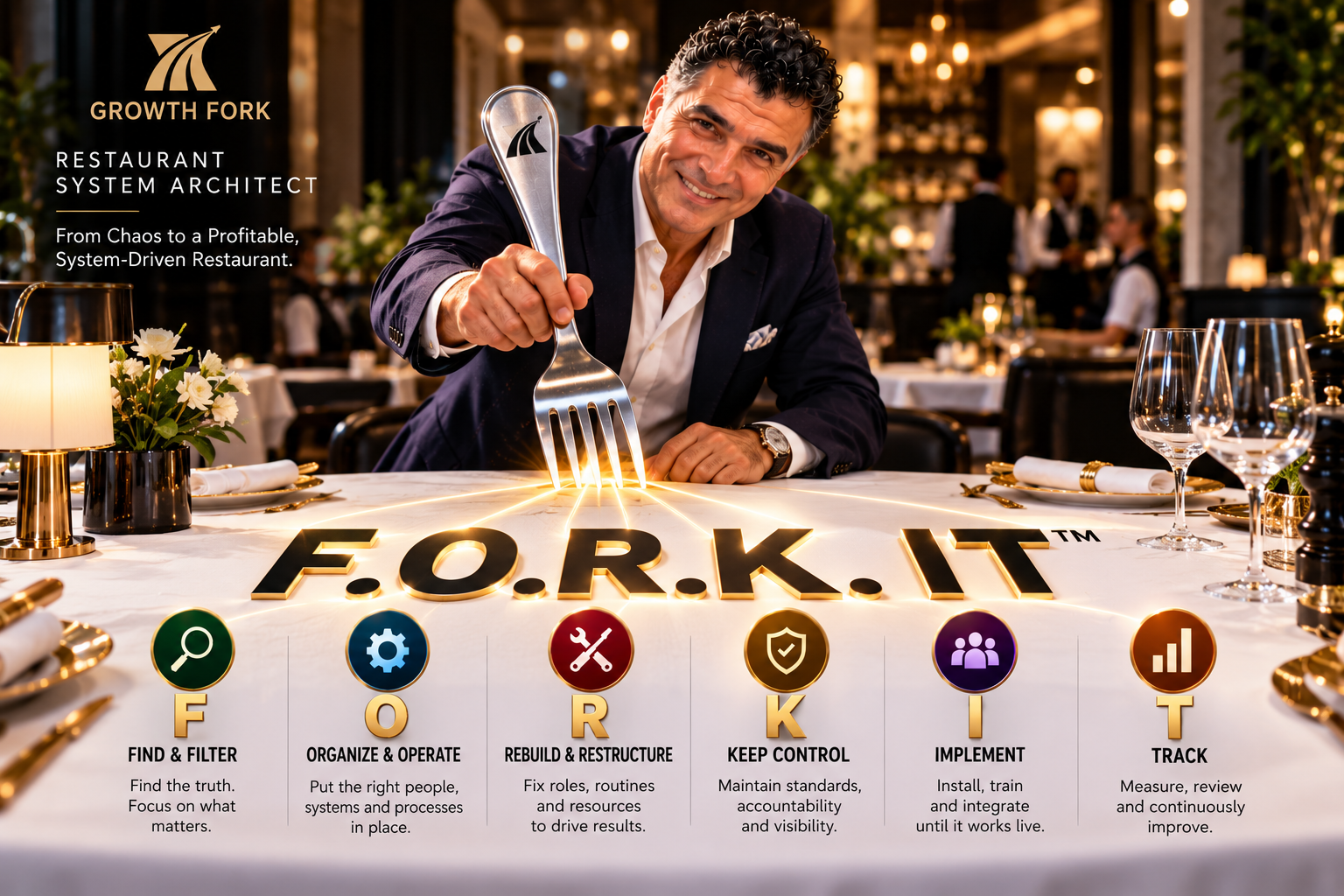
Restaurant SOP Examples UK: Building a Blueprint for Operational Accountability
21 August 2026
Most restaurant owners aren't actually running a business; they're babysitting a series of expensive accidents. If you feel like a full-time firefighter rather than a strategic leader, it's because your operations lack a backbone. You're watching profit margins vanish into food waste and labour inefficiency while staff turnover forces you back into the kitchen. It's an exhausting cycle that stops today. By implementing specific restaurant SOP examples UK hospitality leaders use to scale, you can move from chaos to a system that runs itself.
We know the pressure you're under. With the National Living Wage rising to £12.71 in 2026 and the FSA tightening expectations on written allergen information, there's no room for "winging it" anymore. This guide promises to hand you the operational frameworks required to protect your bottom line and ensure consistent five-star guest experiences. We'll break down the essential systems for kitchen management, front-of-house accountability, and the leadership habits that turn a struggling site into a profitable, multisite-ready asset. It's time to stop reacting and start building a blueprint for real growth.
Key Takeaways
- Stop treating SOPs as simple checklists; define the "agreed way" of working to eliminate guesswork and protect your brand’s reputation.
- Discover the restaurant SOP examples UK leaders use to standardise the guest journey and plug high-cost operational leaks in the kitchen.
- Transition from "firefighter" to strategic leader by building accountability systems that ensure your standards are enforced rather than ignored.
- Execute a phased implementation strategy, using a tactical audit to bridge the gap between current chaos and a structured blueprint.
- Prepare your business for multisite expansion by centralising control and breaking free from the "Founder’s Shadow" that limits growth.
Table of Contents
- Defining the High-Impact Restaurant SOP for the UK Market
- Essential Restaurant SOP Examples: Front and Back of House
- Beyond the Checklist: Building Systems of Accountability
- Implementation Strategy: Deploying SOPs Without Friction
- Scaling Success: From Single Site to Multisite Command
Defining the High-Impact Restaurant SOP for the UK Market
An SOP is the "agreed way" of working. It isn't a suggestion. It's the law of your site. In the high-pressure UK hospitality sector, a Standard Operating Procedure (SOP) serves as the single source of truth. It eliminates guesswork. It protects your brand from the inconsistency that kills reputations. Without these systems, your staff are just guessing. Guessing leads to waste. Waste leads to bankruptcy.
There's a crucial distinction many operators miss. A checklist is merely a tool. An SOP is the standard that governs that tool. Anyone can tick a box. Not everyone can meet a standard. In an environment where the National Living Wage has climbed to £12.71 per hour, you cannot afford to pay for "busy work." Every movement must be efficient. Every action must contribute to the bottom line. This is why looking at restaurant SOP examples UK businesses actually use is vital. You need frameworks that account for British regulations and labour realities.
At Growthfork, we demand the "Growthfork Standard." This means your SOPs must be three things: measurable, observable, and non-negotiable. If you can't see it happening, you can't manage it. If you can't measure the result, you can't improve it. If it isn't non-negotiable, it isn't a system; it's a hobby. Systems are the only way to move from "firefighting" to genuine leadership.
Why Generic Templates Fail UK Hospitality Businesses
Off-the-shelf templates are a trap. They don't account for your specific kitchen layout or the quirks of your equipment. A generic guide for a deep fryer is useless if it doesn't mention your specific filtration system or safety protocols. More importantly, these templates lack the "Accountability Loop." They tell people what to do but never explain how to enforce it. Beware of "SOP bloat" too. If a manual is fifty pages long, no one reads it. Zero reading equals zero adherence. Keep it lean. Keep it tactical. Use language that speaks to the reality of a busy Friday night, not a corporate boardroom.
The Anatomy of a Professional Restaurant SOP
A high-performing SOP follows a strict structure. Start with a Title and Purpose. Why does this task matter? If the staff don't understand how a clean floor impacts the guest experience, they won't care. Next, define the "Success Standard." What does "perfect" actually look like? Use photos if necessary. Finally, write the Procedure. Use staccato, punchy steps. Leave no room for interpretation. "Clean the table" is vague. "Spray sanitiser, wipe in a S-motion, dry with a blue cloth" is a command. This level of precision is what separates the professionals from the amateurs. It creates a culture where excellence is the only option.
Essential Restaurant SOP Examples: Front and Back of House
Stop hoping for good service; start engineering it. Most operators obsess over the kitchen but ignore the revenue-generating behaviours at the front of house. This is where profit is won or lost. Effective restaurant SOP examples UK operators rely on cover every touchpoint of the guest journey. You aren't just selling food; you're selling a consistent, predictable experience. If the experience varies between Tuesday and Saturday, you don't have a business; you have a series of lucky breaks.
Management must oversee the "system for the systems." This means ensuring daily compliance isn't a suggestion but a requirement for employment. When staff see that standards are non-negotiable, they stop cutting corners. They begin to take pride in the blueprint because it provides them with clarity. Clarity reduces stress. Reduced stress lowers staff turnover. It's a cycle of accountability that starts with the examples you set in your manuals.
Front of House (FOH) Service Standards
The guest journey begins the moment someone walks through the door. You have 30 seconds to set the tone. A standard greeting isn't "Hi, how are you?" It's a specific, branded welcome that identifies if the guest has visited before. This allows for tailored service. Upselling should also be a system, not an afterthought. Standardise the "suggestive sell" for bottled water, aperitifs, or specific side dishes. This directly impacts your average transaction value (ATV) without making the team feel like pushy salespeople. Finally, complaint handling needs a tactical blueprint. Use a three-step process: Acknowledge the issue immediately, Act to resolve it within five minutes, and Follow up before the bill arrives. This turns a mistake into a loyal fan.
Back of House (BOH) and Kitchen Efficiency
Kitchen efficiency is about controlling "operational leaks." Food waste is a direct hit to your profit margins. If your prep lists aren't based on calculated par levels, you're throwing money in the bin. Every chef must know exactly how much to prepare based on live data, not "gut feeling." Closing down is another critical area. The "Clean to Shine" standard ensures you are always ready for an inspection. Always align your cleaning protocols with the Food Standards Agency guidance to protect your FSA rating and guest safety. Stock control must be equally rigid. Standardise the delivery check-in. Weigh the produce. Check the temperatures. Verify the invoice against the physical goods. This prevents "invisible" theft and ensures you only pay for what you actually receive.
If you're unsure where your systems are failing, it's time to evaluate your current operational accountability to identify the gaps in your blueprint. Building these restaurant SOP examples UK into your daily rhythm is the only way to protect your margins whilst you scale.
Beyond the Checklist: Building Systems of Accountability
Most restaurant SOP examples UK operators download are destined for the "system graveyard." They become shelfware because they lack the engine of accountability. A manual doesn't change behaviour; leadership does. If you've spent hours writing procedures only to watch your team ignore them, you don't have a documentation problem. You have a management problem. You've built a list, but you haven't built a culture that respects it.
Your managers aren't there to plate food or run drinks when things get busy. That's a failure of delegation and a surrender to the weeds. They are there to enforce the standard. Every time a manager ignores a dirty table or a sloppy garnish, they are setting a new, lower standard. Implementing "Operational Accountability" is about more than just talking. It requires professional Operational Accountability Specialist Services to install the rigour your business lacks. This is the bridge between having a plan and seeing it executed every single shift.
Real-time intelligence is your best friend in this process. Relying on paper logs is prehistoric and easily falsified. High-performing sites use hospitality software to track performance. When you can see live data on labour cost benchmarks or average transaction values, you can spot where the system is breaking down before the shift even ends. For base-level compliance, many start with the Food Standards Agency's Safer Food, Better Business (SFBB) pack. It is a solid foundation, but real accountability goes far beyond basic hygiene.
Moving from Firefighter to Strategic Leader
Stop reacting. Start leading. Identify the operational leaks that pull you back onto the floor. Is it poor recruitment? Lack of training? These are systems problems. Adopting an "Accountability Specialist" mindset means choosing straight-talk over soft empathy. You aren't there to be liked; you're there to ensure the business survives and thrives. Professional coaching for restaurant owners is often the catalyst for this shift, moving you from the weeds to the boardroom.
Enforcing the Standard: The Non-Negotiables
Implement the "See it, Say it, Fix it" rule. If a manager sees a deviation from the SOP, they must address it immediately. No exceptions. Conduct a regular "Operations Audit" to stress-test your blueprint. Link SOP adherence directly to KPIs and performance reviews. If your staff turnover is high because of inconsistency, it is likely because you haven't made the standard non-negotiable. Reward those who follow the blueprint and exit those who won't.
Implementation Strategy: Deploying SOPs Without Friction
Deployment is where most owners fail. They print a manual, dump it on the counter, and expect a miracle. It doesn't work that way. You're fighting human nature and years of bad habits. To succeed, you need a phased approach that treats the rollout like a military operation. This isn't just about digitising lists. It's about changing how your team thinks and acts under pressure. If you're studying restaurant SOP examples UK operators use to maintain consistency, you'll see they prioritise clarity over volume.
Phase 1: The Audit. You can't fix what you haven't measured. Spend three shifts observing. Document what is actually happening versus what should happen. Phase 2: The Construction. Write your blueprint using tactical British English. Avoid corporate jargon. Be direct. If you want restaurant SOP examples UK teams can actually follow, keep them punchy and visual. Phase 3: The Deployment. This is the "selling" phase. You must convince the team that the system makes their lives easier. Phase 4: The Review. Operations evolve. Update your SOPs monthly to reflect new equipment, menu changes, or regulatory shifts.
Book your operational audit today
Staff Training and "Buy-In" Tactics
Staff resist systems when they feel like "policing." Flip the narrative. Show them how SOPs reduce their stress by eliminating confusion. When everyone knows the "agreed way," the blame game stops. Use restaurant manager training to create "SOP Champions" on every shift. These are your lieutenants. They enforce the standard when you aren't there. Take a "Boots-on-the-Ground" approach. Ask the people doing the work where the system is clunky. If they help build it, they won't break it.
UK Regulatory Alignment and Compliance
Your SOPs must be your legal shield. In the UK, this means integrating HACCP and Food Safety standards directly into your daily kitchen routines. Don't keep your food safety manual in a separate dusty binder. Make it the daily workflow. Standardise your "Risk Assessment" for daily operations to ensure Health & Safety isn't an afterthought. This level of rigour is what secures a five-star FSA food hygiene rating. It protects your customers and your licence. When the inspector walks in, your team shouldn't panic. They should just keep following the blueprint. It's about being prepared, not just being compliant.
Scaling Success: From Single Site to Multisite Command
The "Founder’s Shadow" is the single biggest threat to your expansion. It's a common trap. You are the heartbeat of your first site. You know every guest, every pipe that leaks, and every staff member's mood. But you cannot be in two places at once. If your business depends on your physical presence to maintain standards, it isn't a business; it's a high-pressure job. Scaling requires you to kill the hero complex. You must replace your personality with a blueprint that functions without you.
Multisite success is built on the back of rigid, replicable systems. By studying the restaurant SOP examples UK multisite groups use, you can build a plug-and-play model for your second, third, and tenth locations. You aren't just opening a new restaurant; you are deploying a proven operating system. This is where Restaurant multisite Accountability becomes your primary focus. Without a centralised command structure, your brand will dilute with every new opening. Consistency is the only thing that protects your reputation at scale.
Operational freedom is the end goal. This means building a business that doesn't need you for daily survival. It allows you to focus on high-level strategy, menu engineering, and further growth. Real-time intelligence is the only way to manage this transition. You need to know your labour cost benchmarks and food waste figures for every site from a single dashboard. Systems don't sleep. They don't get tired. They don't have bad days. Build them correctly, and they will protect your profit margins whilst you sleep.
Centralising Control with Real-Time Intelligence
Stop managing by "gut feeling." Use proprietary hospitality software to spot performance gaps across different sites instantly. If Site A has a significantly higher average transaction value than Site B, you have a training gap. If Site B is leaking profit through food waste, you have a compliance gap. Standardising your "New Site Opening" blueprint allows for rapid expansion without the usual chaos. It ensures that the "Guest Journey" remains identical whether a customer visits you in London or Manchester. Brand consistency is non-negotiable; it is the contract you sign with your guests.
Your Next Steps to Operational Excellence
Don't try to systemise everything at once. You'll fail. Start with one "Leak." Choose the area of highest chaos; perhaps it's your kitchen prep or your FOH greeting; and systemise it first. This is how you begin the transition from a "firefighter" to a "systems architect." Move with purpose. Demand accountability from your managers. If they cannot enforce the restaurant SOP examples UK standards you've set, they are the wrong people for the job. It is time to stop being an operator and start being a leader.
Enforce your standards with Growthfork Operational Consulting
Take Command of Your Restaurant’s Future
Operational chaos is a choice. You can continue firefighting every shift, or you can install the systems that protect your profit margins. We've defined how restaurant SOP examples UK leaders rely on are actually contracts of accountability. They move the burden of performance from your shoulders to a replicable blueprint. This is the only path to multisite growth and genuine operational freedom.
As an Operational Accountability Specialist, I've seen these frameworks work. By combining leadership strengthening programmes with proprietary hospitality software, we eliminate the guesswork that drains your bank account. You've seen the strategy. You understand the "why." Now, it's time to stop reading and start enforcing. Your business won't scale itself; you have to build the infrastructure to make it happen.
Plug the profit leaks in your restaurant with a Tactical Operations Audit from Growthfork
The transition from a stressed owner to a strategic leader starts with a single standard. Fix your highest-impact leak today. Build a business that commands respect and delivers predictable results every single shift. Your multisite future is waiting.
Frequently Asked Questions
What are the most important SOPs for a UK restaurant to have?
The most critical SOPs cover food safety, opening and closing routines, and guest service standards. In the UK, your HACCP based procedures are legal requirements that protect your licence. Beyond compliance, you need a standardised guest journey to ensure consistency across every shift. Without these core systems, your site relies on luck rather than logic. Start with these areas to build your operational backbone.
How do I write an SOP that my staff will actually read?
Use staccato steps and visual Success Standards to keep your team engaged. Staff won't read a wall of text during a busy service. Use punchy, command based language like "Spray sanitiser" or "Wipe in S-motion." Include photos of what "perfect" actually looks like. Professional restaurant SOP examples UK teams follow are always lean, tactical, and easy to digest in under two minutes.
How many SOPs does a typical restaurant need to function?
Aim for the "Vital Few" rather than the "Trivial Many" to avoid system overload. A typical site needs between 15 and 25 high impact SOPs covering the most frequent or high risk tasks. Documenting every minor action leads to "SOP bloat" and zero adherence. Focus on the systems that protect your profit margins and guest experience. Quality always beats quantity in operational documentation.
How often should I update our restaurant operations manual?
Review your manual at least every six months to ensure it reflects operational reality. New equipment, menu engineering updates, or UK regulatory shifts mean your blueprint must evolve. If a procedure no longer works on a busy Friday night, bin it and rewrite it immediately. Static manuals are dead documents. Keep your systems alive to keep your team accountable and your standards high.
Can SOPs really help improve my restaurant’s profit margins?
Standardisation is the only way to protect your profit margins as you scale. By eliminating guesswork, you reduce food waste and hit your labour cost benchmarks consistently. SOPs stop the "operational leaks" that drain your bank account every month. When every movement is efficient and every portion is controlled, your bottom line improves. Systems turn a chaotic kitchen into a profitable engine.
What is the best way to train staff on new standard operating procedures?
Implement the "Show, Do, Check" method for maximum impact on the floor. Demonstrate the Success Standard yourself. Watch the staff member perform the task. Provide immediate, no-nonsense feedback if they miss the mark. This "boots-on-the-ground" training ensures the standard is fully understood. Don't just hand them a binder. Lead by example and verify their performance during a live shift.
How do I hold managers accountable for following the SOPs?
Link their performance reviews and bonuses directly to SOP compliance KPIs. Use a regular "Operations Audit" to verify that standards are being met when you aren't present. If a manager ignores a deviation, they are effectively setting a new, lower standard for the whole team. Hold them to the "See it, Say it, Fix it" rule. Accountability always starts at the top.
Should I use digital checklists or paper-based SOPs?
Digital checklists are the professional standard for multisite accountability and real-time intelligence. Paper logs are prehistoric and easily falsified by unmotivated staff. Digital tools provide live data and allow you to spot performance gaps across different sites instantly. When reviewing restaurant SOP examples UK operators use, the trend is clear. Digital systems ensure that your data is accurate, actionable, and transparent.
Want this working in your restaurant?
Find your biggest profit leak with the free scorecard, or talk it through with Murat on a free 30-minute call.